
Worst case Ontario
Council, province, scheme to tax new housing in housing shortage

As bad as Halifax’s housing situation has gotten in the past decade, we still had some things going for us. First, we were more adaptive in changing the web of regulations that restrict housing, though the progress is debatable. Secondly, and more obviously, we never got into taxing new housing to death like other cities in Canada, especially in B.C. and Ontario.
At first, that seemed to be almost accidentally: Halifax didn’t change its permitting fees for over two decades until 2023. After a 25% hike, the province stepped in, blocking HRM’s ability to increase such fees. Hot off the press today, the province appears to be walking away from that commitment. Municipal Affairs Minister John A. Macdonald is saying he isn’t considering extending the freeze.
This has several councilors salivating. Many have long wanted to hike these fees, lured by the inane mantra of “growth pays for growth”. In reality, what we see here is the natural instinct of municipal government finance: pull up the ladder and gouge the young. Anything to avoid raising property taxes. These fees do double-duty: by raising the cost of new housing units, they can limit regular property tax increases, and reduce new housing activity. Raising the cost of new units also mechanically lifts the value of existing units - a literal barrier to new entry as economists describe them.
It’s disappointing to see self-described progressive councilors Cuttell, Cleary, Morse and White talk up this extraction tool of the old and established over the young and new-coming. Some quotes:
“I’m just really concerned that we're missing out on the housing boom that’s happening. We could have an increase in fees that would really help us with our budget.”" - Councilor Morse
Deputy Mayor Patty Cuttell said it is obvious that the city’s current system is not working, and growth does not pay for growth.
I’m being harsh because the entire project of municipal government, the third rail, the unspoken reality is that no-one wants to pay for anything. The average homeowner paying $217 a month (based on a capped average valuation of $338,500 and a municipal rate of 0.77%) doesn’t get even close to paying for ongoing services, not to mention new services and deferred maintenance. New housing in Nova Scotia is already heavily taxed - because it comes onto the assessment rolls at full value, not a severely limited capped value. The typical new 1-bedroom apartment is likely paying more property tax than the average single family home.
In the end, this is a cowardly move, but one with real consequences. The best part of property taxes is you are taxing property that is built and fixed - it can’t move, it can’t hide. That’s not true of new construction. If builders can’t make their projects work on paper, they won’t build.
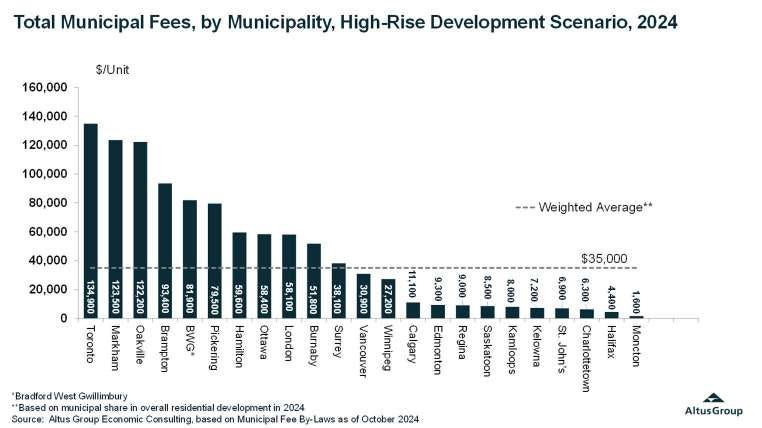
Halifax had it’s best year ever last year for new housing starts. It’s up there with Calgary, Edmonton and Moncton for country-leading housing construction. It’s noteworthy that none of those cities have meaningful development fees according to this benchmarking study. Meanwhile, Toronto, which taxes every new UNIT of housing to the tune of $134,900, is now building at a third of our pace.
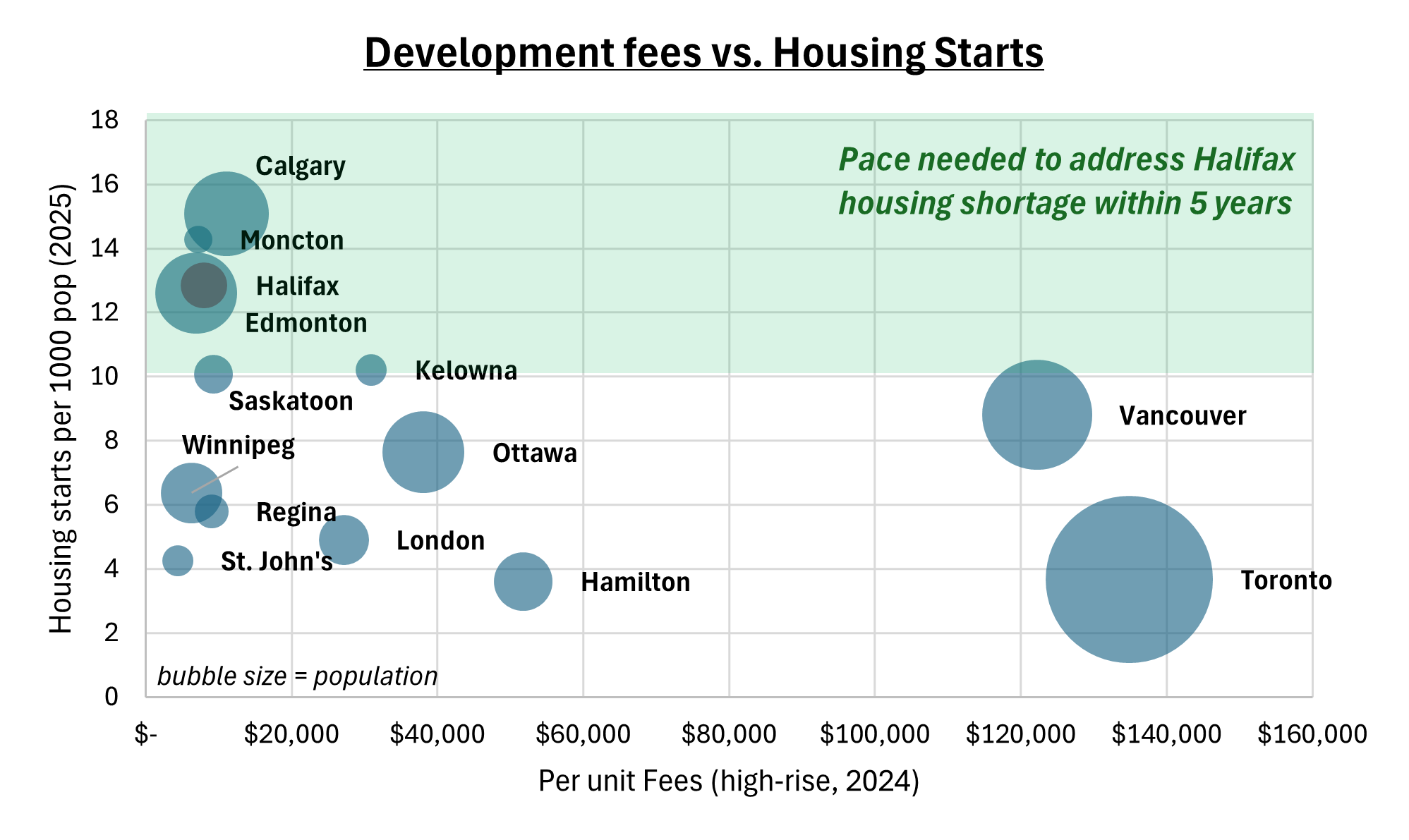
I guess these councilors want to be more like Toronto - and you’ll be the ones paying for it.
So disappointing
Has anyone ever crunched the numbers to see exactly how much capped property valuation is left sitting on the table? Ie, take the difference of property value and capped value of every address and add it all together to get a gross number of potentially taxable value? What would the percentage be compared to total currently taxable property? If it was all able to be included, how much could tax rates drop to still reach the current municipal budget? What tax rate would fund an 'ideal' budget?