
The Number 60 Problem
So you've got the worst economy on the continent - what now?

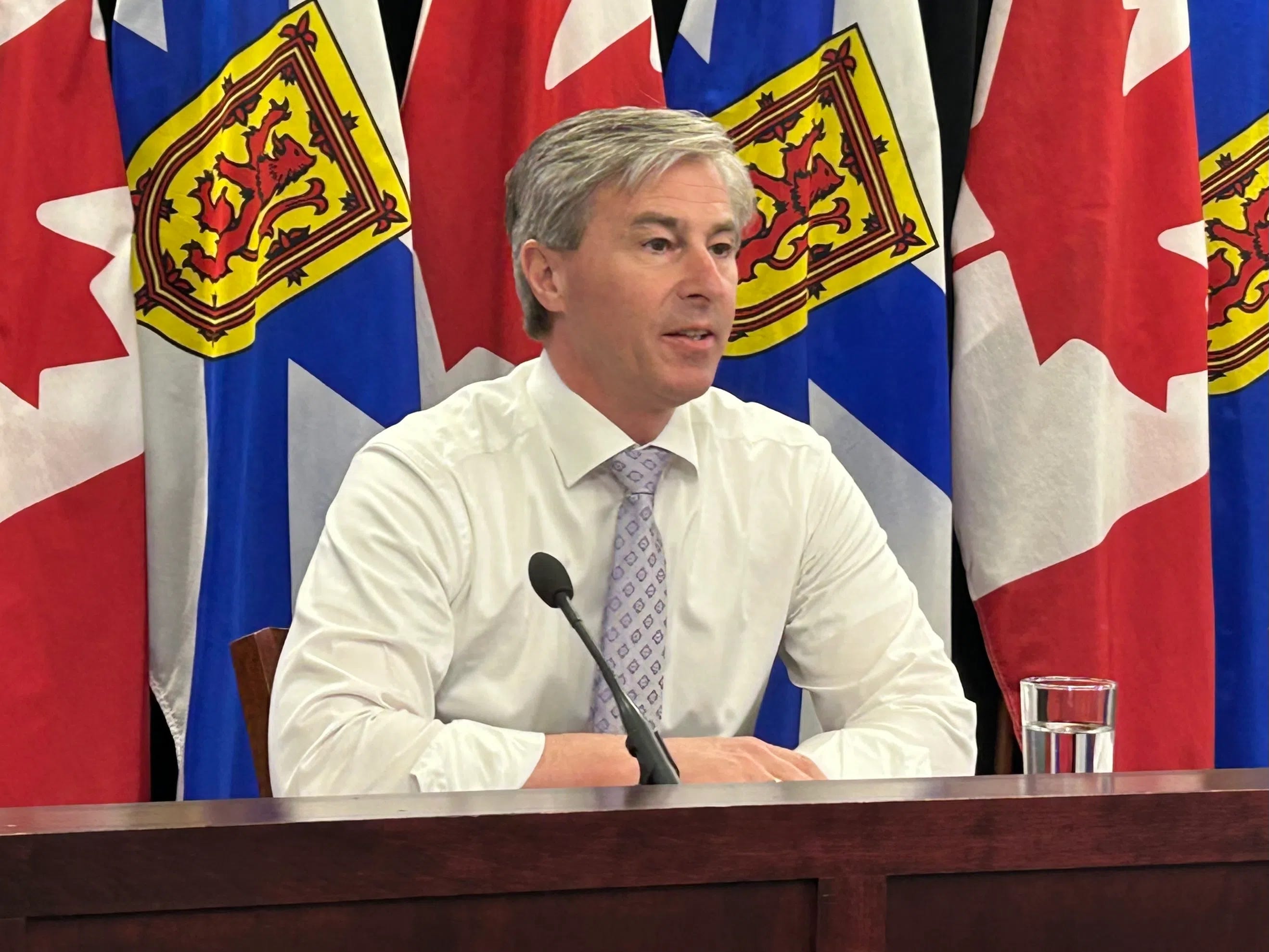
Premier Tim Houston has taken to describing Nova Scotia’s economic challenges in a useful way:
Nova Scotia’s GDP per capita is the lowest in North America. The lowest in North America. If you look at the 50 states and the 10 provinces, not counting our North, so 60 jurisdictions, Nova Scotia is 60 of 60 in GDP per capita.
If you look at the GDP per capita, like those 60 that I mentioned, you’d see New York State number one, Massachusetts number two, Alberta would be the first province that shows up, somewhere 15, 16, but then you just keep looking down that list. Alabama, keep looking down. Mississippi, keep looking down. West Virginia, just keep looking down. And you can see Nova Scotia at the bottom.
Other than the slight complication of how to compare US Dollars to Canadian ones — i.e., whether to use market exchange rates or Purchasing power parity exchange rates, it’s quite simple to confirm the premiers point.
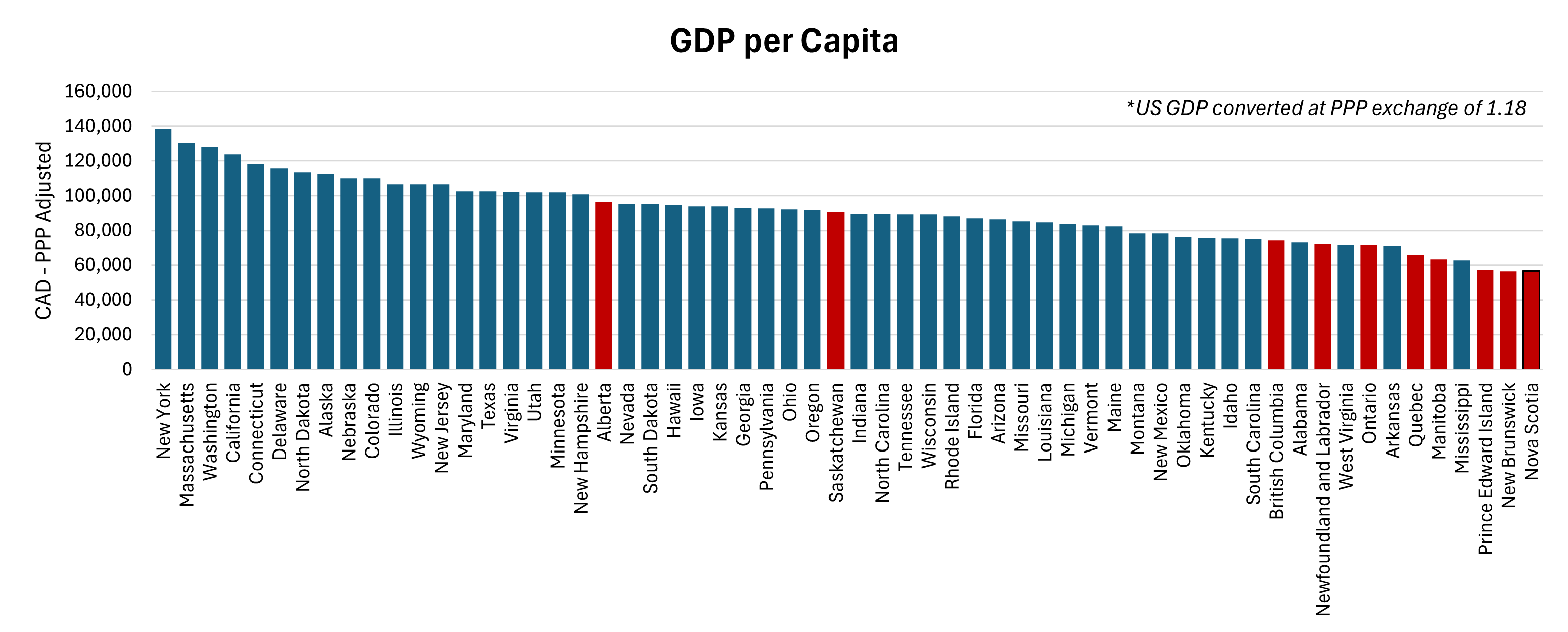
In economics terms, being 60 out of 60 means were far from the “frontier”. The leading edge. We shouldn’t need to come up with new whizbang ideas or innovations, we’ve got a lot of runway just in catching up to how others are doing.
Sidenote: this is a weakness of most “economic development” discussions, particularly stemming from “the organizations” like ACOA. They want to be funding game-changing new innovators in cutting-edge sectors to generate buzz. See hydrogen, ocean-tech, that person who wants a space port in Cape Breton. But actual growth looks more like being 10% more efficient at homebuilding (which generates no ribbon cuttings, and likely nasty emails from NIMBYs).
Being behind like this is an opportunity — do the simple stuff right and you can get above average growth for a long time as you catch up. Of course, there’s always a reason why places haven’t made good changes. I’m a firm believer that folks will happily pick up a $20 bill on the ground. Unfortunately, doing the things necessary to generate growth often involve tradeoffs, especially political tradeoffs.
Where should we look for good ideas? I think GDP per capita can be a good guide, but it’s not everything. Some features of GDP are clearly not replicable — we aren’t going to sprout New York’s financial industry or California’s tech ecosystem. But even more importantly, while these leading states are rich — they aren’t growing. Nova Scotia needs to get richer — but it also needs to grow, we’ve got too small a population to be fiscally and economy self-sufficient.
So, I’d add another dimension to the Premier’s criteria, what places are rich (above U.S. average) and growing (more than a modest 1% per year)
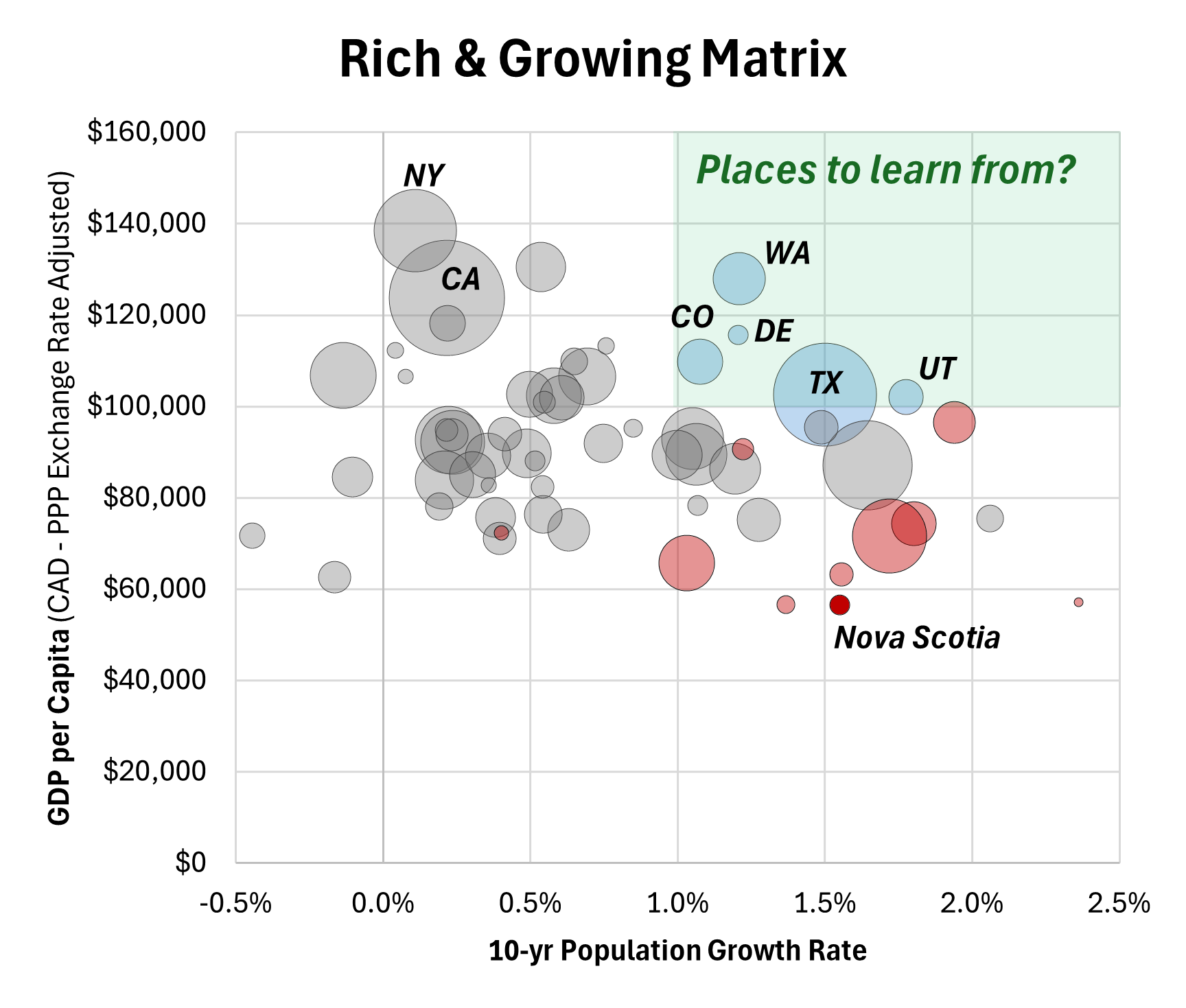
There’s an eclectic mix of states in the “good quadrant” of rich and growing states:
Washington
Colorado
Delaware
Texas
Utah
So I’m kicking off a new series where I’ll highlight policies that these states have that are good for growth, whether that’s economic or population growth — or both. I’ll start with taxes, specifically how Texas approaches its taxes, and how Nova Scotia could benefit from a tax shift.
After a generation,or more, of Nova Scotians saying NO! to every economic development that was not paid for(or heavily subsidized) by taxpayers, here’s where we are. Taxpayer-funded wind energy won’t change anything. I agree we need to focus on building things that people need and are willing to pay for - like housing and reliable forms of energy. In stead, many of us are still focused on saying NO! to proven economic development winners like Cabot.