
Halifax's imaginary investment plan
When capital plans are more manifesting than budgeting

Sometimes, I start a blog with a hot take in mind. Other times, I start with a chart in mind. In this case, the chart I have in mind is this all-timer on how bad forecasters are at forecasting U.S. interest rates. After the 2008 recession there was a half-decade period where forecasters continue to expect interest rates to rise but they didn’t.
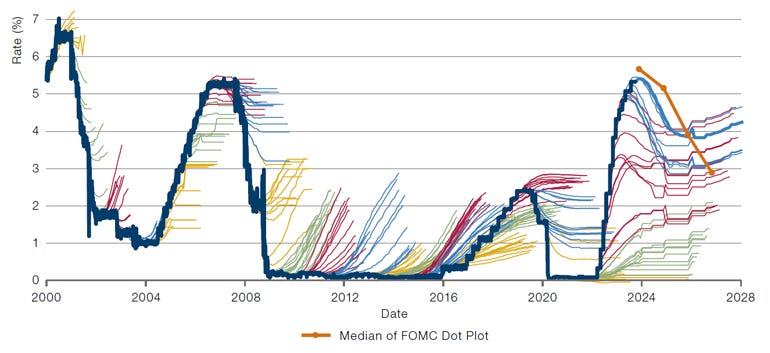
Forecasting interest rates is objectively tough, because so many factors are at play and out of anyone’s control. But a municipal budget is much less uncertain. You raise money to fund services and invest. Sometimes you get matching funds from other orders of government to help out. Sometimes you get cost overruns. But you should have some idea of how much you’ll have to spend - even over a few years.
That’s why it’s depressing to see Halifax’s budget plan. While the latest plan budgets $314 million in capital spending this year, it expects 30% annual growth on that investment spending - expecting it to more than double to $687 million by 2028.
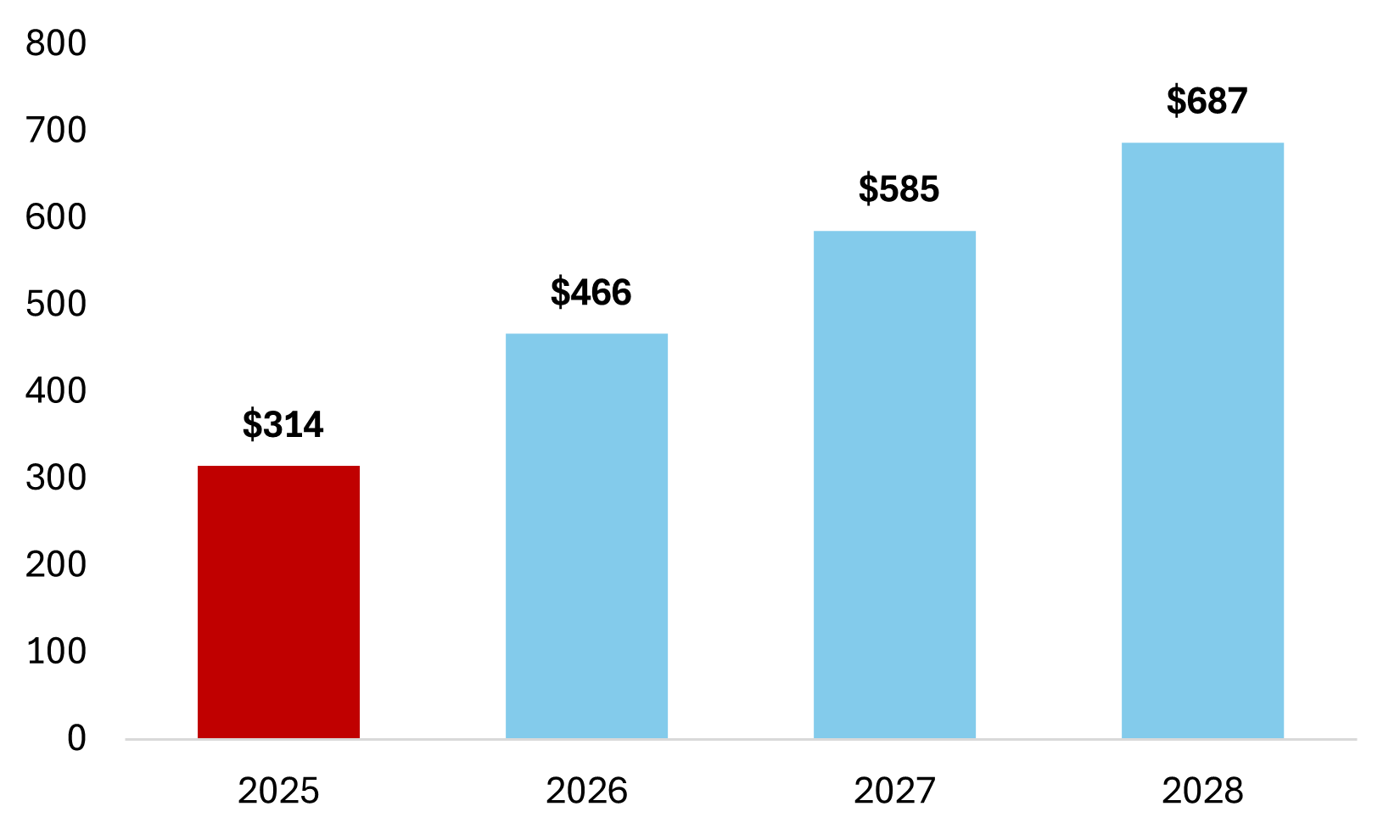
The problem with this tremendous ramp-up in investment is, Halifax said they’d do the same thing every year for the past 3 years. Starting in 2023-2024, the capital plan started to jam huge amounts of spending into later years of the 4-year plan1.
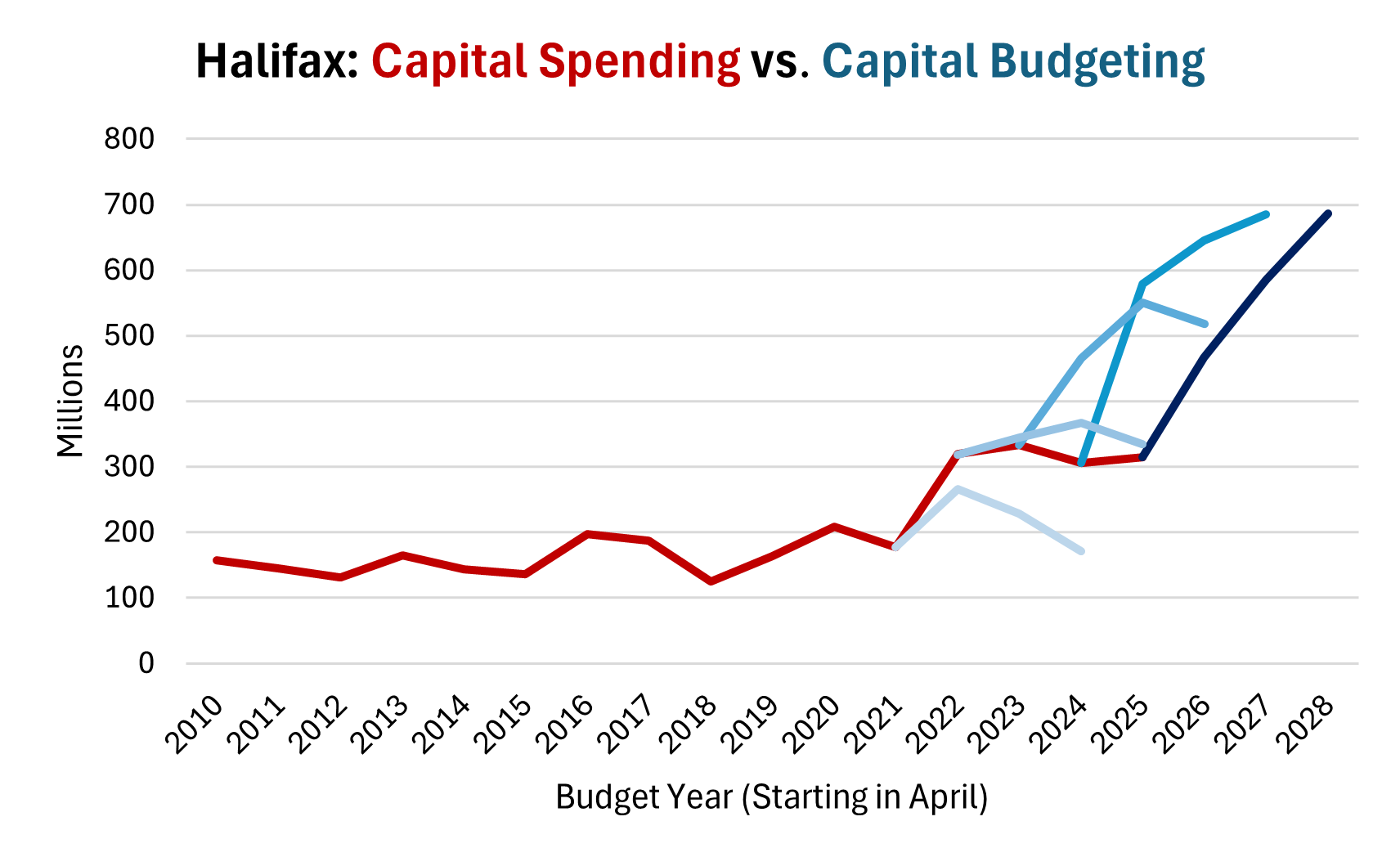
In reality, capital spending jumped in 2022 - but has stayed roughly near $300mn since, mostly going down, not up. If current trends continue, there’s about a billion dollars of identified investments that HRM is putting in the window that it won’t actually deliver (and maybe that’s the point - to give everyone involved the appearance of delivering projects without the heartache of raising taxes to fund them). Municipal governance at its finest.
Someone closer to city hall’s inner workings might know why this trend emerged so rapidly