
Farewell, Savage austerity
Celebrating a decade-long experiment in small government

Years ago, while living in Toronto, I met John Tory. It was a pretty standard retail politics interaction - his raptors themed jacket was cool. I left that night with a faint, but good impression of Tory. It wasn’t until years later that I even considered associating the Mayor with the clear downsides of living in Toronto, whether it was the constantly overflowing trash bins or the sky-high cost of rent.
That aside, aside, it’s a good time to review Mike Savage’s time at City Hall. After 12 years, the still-popular mayor has decided to move on to new adventures (the lieutenant governor’s seat). As I see it, municipal governments have two jobs that matter:
Setting “land-use” rules (what you can build and where)
Setting the municipal budget
On the first, the city has done a good, if slow, job. But it’s also a pretty murky area to judge. Meanwhile, setting your budget is more within your control, and since it’s about money, its easier to find numbers.
When you look at the numbers, the takeaway is clear - Mayor Savage has led an era of austerity at the Grand Parade. As the problems of decline became the problems of growth - Mayor Savage held the line on spending. As the problems of economic stagnation became the problem of inflation and worker shortages, Mayor Savage held the line on spending.
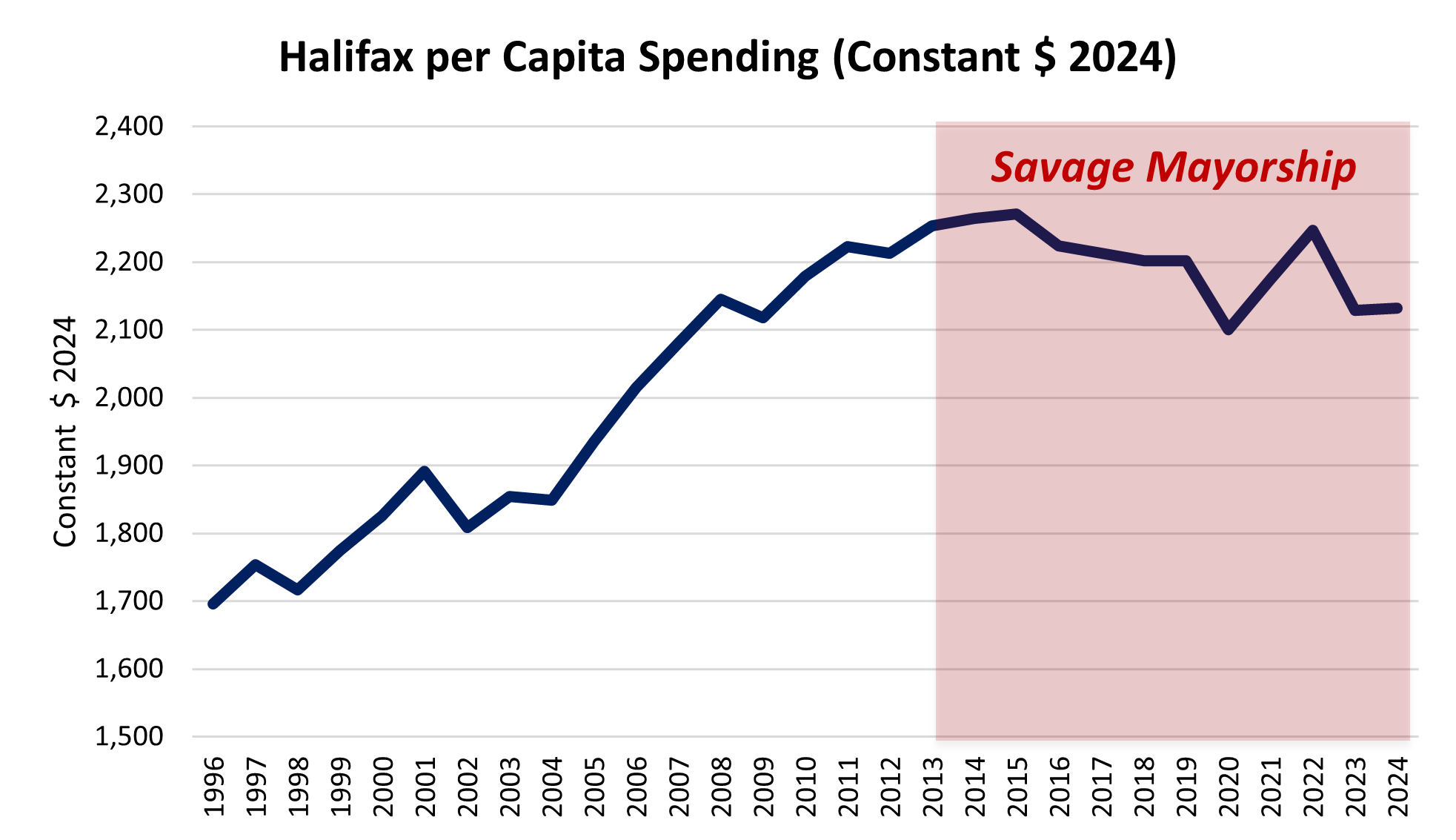
HRM’s real (inflation-adjusted) spending per resident is lower today than it was when the Mayor took office twelve years ago. That means the city is less able to pay library staff, fix potholes, run buses, or deliver any other programs that you care about. If you like the idea of small government, then this is a tremendous achievement. And it does seem like there is ravenous demand for austerity at the local level, with some promising to go even further.
Time for more cuts?
This 12-year trend of spending restraint also highlights an oddity of the Andy Fillmore campaign. As mayor, the former Trudeau MP promises to:
“Freeze the municipal tax rate for two years while a comprehensive value-for-money audit on HRM’s service delivery is completed.”
As others have pointed out - freezing the tax rate does not freeze your tax bill, and the current council has repeatedly cut the rate. But the second part is also worth considering. Fillmore wants to spend the next two years studying where he can cut the budget.
This is basically saying that Fillmore (a Trudeau MP) will do a better job than Mayor Mike (a former Paul Martin MP) at austerity, after Mayor Mike has spent over a decade effectively shrinking the municipal budget. If you aren’t aware, the federal Liberals have spent the past decade boosting spending considerably - where was that austerity energy from Fillmore when he sat in Ottawa?
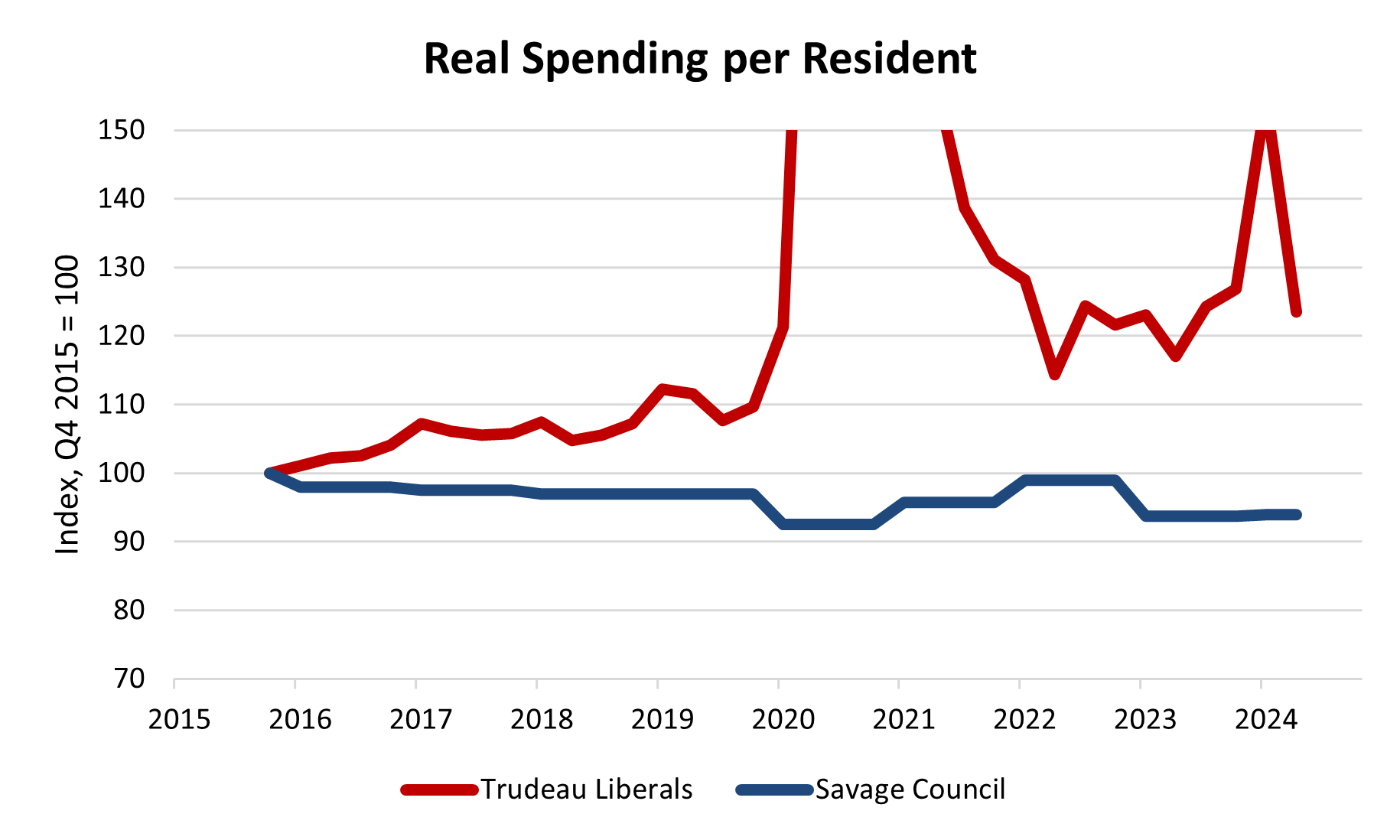
And here in Halifax, what “easy” cuts are left? How many more ferry cancellations, strikes and stalled programs do we need?
Political Capital
Finally, back to Mayor Mike. I’ve never met Mayor Savage, but I’ve heard him repeatedly turn to a saying about politics (paraphrasing):
Politics is about spending political capital, not hoarding political capital
My question for the outgoing Mayor - leaving after three terms while still well liked - is, did he spend his political capital on the budget? Or has he left the next council with a looming budget problem that will lead to a weaker municipal government and city?
If you’d like to read more about Mayor Savage, John DeMont has a nice exit interview in the Herald.
Thank you, Mike for your service to your community
If the Mayor was all about austerity, why are our property taxes the highest on earth?